Quick answer: a flatbed carries your whole vehicle on its deck with all four wheels off the road. A wheel-lift raises one end and tows the car on its other two wheels. Flatbed is safer for EVs, all-wheel-drive, lowered, classic and luxury cars, and for any car with drivetrain or wheel damage.
When you call for a tow, you’ll usually get one of two kinds of truck. Here’s how they differ and when it matters.
Flatbed tow trucks
A flatbed has a long, flat deck that tilts down to the ground. The car is winched or driven up onto it and strapped down at the wheels.
- All four wheels are off the road, so the transmission, differentials and tires don’t turn.
- No wear on your tires and no extra kilometres on the odometer.
- Safe for EVs and AWD vehicles, which can be damaged if any wheels turn while towed.
- Good for cars that don’t roll, have damaged wheels, or have been in a crash.
Wheel-lift tow trucks
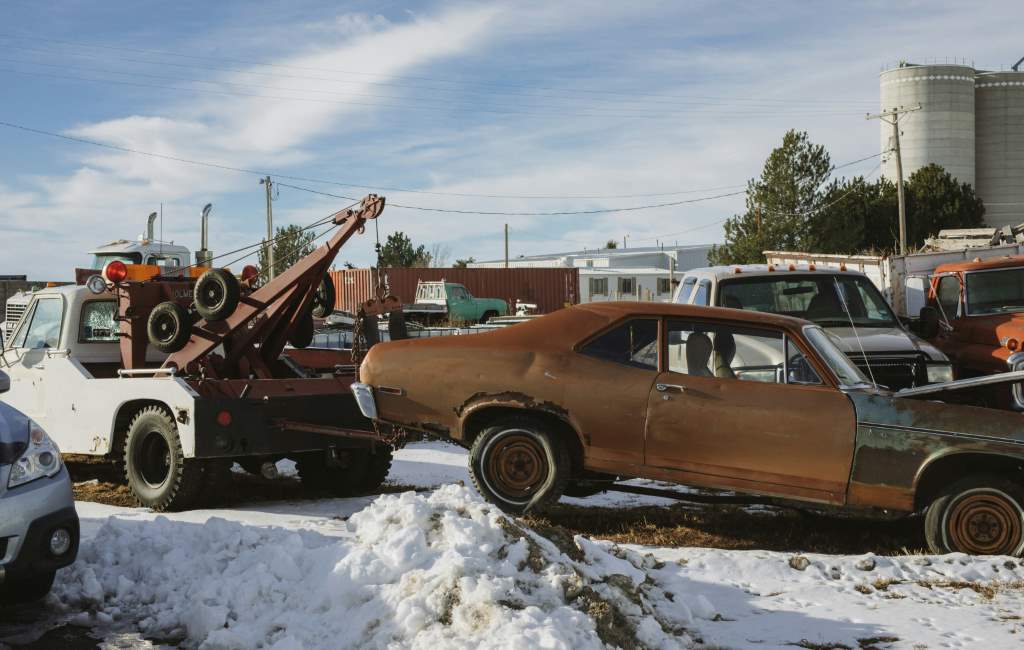
A wheel-lift uses a metal yoke that cradles two wheels and lifts that end of the car. The other two wheels roll on the road.
- Quick to hook up, and useful in very tight spaces.
- Common for impounds and short city tows.
- Two wheels and part of the drivetrain are turning the whole trip, unless dollies are used.
When flatbed is the right choice
- Electric vehicles. Most makers say EVs shouldn’t be towed with the drive wheels on the ground. See EV & AWD towing.
- All-wheel drive. Towing with two wheels down can damage the centre differential or transfer case.
- Lowered and exotic cars. A low-angle flatbed avoids scraping bumpers. See luxury & exotic transport.
- Long distances. No wear on the car, however far it goes. See long distance towing.
- Motorcycles. Bikes ride upright on the deck, strapped down. See motorcycle towing.
What we use
City Tow Truck runs a medium-duty Hino flatbed, and every job we do is on the flatbed at no extra charge. Read about flatbed towing or call 604-265-5888.