
Quick answer: towing a car with a rope or chain is risky because the towed car may have no power brakes or power steering, the rope can snap, and many vehicles can be damaged if their wheels turn while towed. A flatbed tow is usually safer and often cheaper than the repair a DIY tow can cause.
It’s tempting to save money by pulling a friend’s car home with a strap or a rented dolly. Here’s why it often costs more in the end.
The towed car is hard to control
When the engine is off, power steering and power brakes stop working. The driver of the towed car has to push hard on the brake and steering wheel, and can easily run into the back of the tow vehicle in stop-and-go traffic.
Straps and chains fail
A tow strap or chain under sudden load can snap and whip back with enough force to break glass. Attaching to the wrong part of the car can bend bumpers or suspension parts.
You can damage the drivetrain
Many modern cars shouldn’t be towed with any wheels on the ground:
- All-wheel-drive vehicles can damage the centre differential or transfer case.
- Electric vehicles can be damaged if the drive wheels turn while the car is off.
- Automatic transmissions can overheat when towed with the drive wheels down.
Check your owner’s manual before you move any car. Read flatbed vs wheel-lift.
The rules
Towing another vehicle on public roads in BC has rules on how the vehicles are connected and how they’re lit, and a towed car that causes a crash can leave you liable. Your insurance may also not cover damage caused by an improper tow.
Safer options
- Roadside help. A battery boost or tire change may get the car moving.
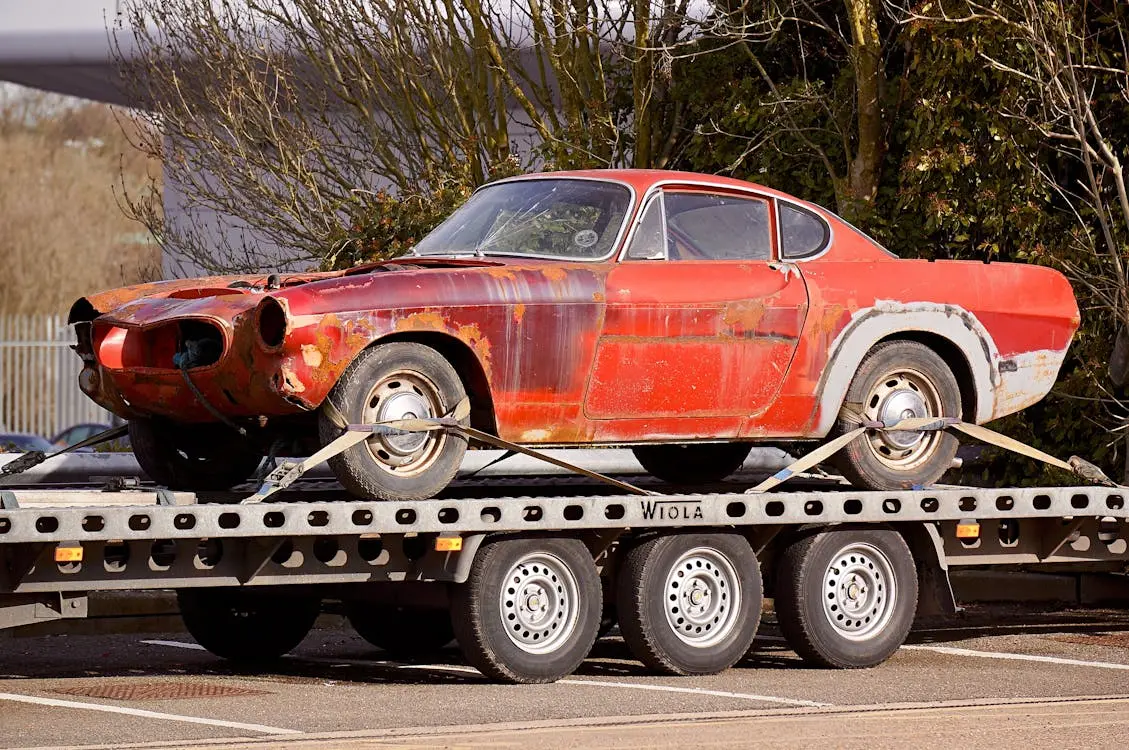
- A flatbed tow. Your car rides with all four wheels off the road. See flatbed towing.
- Non-running car transport. For project cars and cars that have been sitting. See non-running car transport.
Get a price before you decide. Call or text 604-265-5888.